Gas cylinders and industrial gas equipment require careful handling during loading and unloading. Cylinders are heavy, round, pressurized, and difficult to move manually. Improper handling can lead to worker injuries, cylinder damage, delivery delays, and serious safety risks.
A Gas Hydraulic Tail Lift is a vehicle-mounted hydraulic loading platform designed to help load and unload gas cylinders, cylinder trolleys, racks, cages, and related industrial gas materials safely and efficiently. It is useful for gas agencies, oxygen suppliers, industrial gas distributors, LPG transporters, hospitals, warehouses, and logistics operators.
What is a Gas Hydraulic Tail Lift?
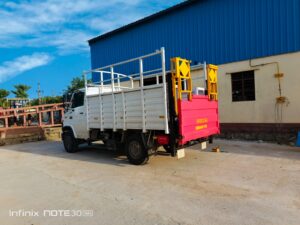
A gas hydraulic tail lift is a hydraulic lifting platform fitted at the rear of a truck, pickup, van, or commercial vehicle used for gas cylinder transport.
The platform lowers to ground level, cylinders or cylinder trolleys are placed on it, and the hydraulic system lifts the load to the vehicle floor height. This reduces the need for workers to manually lift heavy cylinders into the vehicle.
It provides a safer, faster, and more controlled method of loading and unloading gas cylinders.
Why Gas Cylinder Vehicles Need Hydraulic Tail Lifts
Gas cylinder handling is different from normal goods handling. Cylinders must be moved carefully because they are pressurized and can roll, fall, or get damaged if handled roughly.
Common challenges include:
- Heavy cylinder weight
- Cylinder rolling or falling
- Risk of worker injury
- Damage to valves, caps, and cylinder body
- Slow loading and unloading
- Labour dependency
- Lack of loading docks
- Difficulty handling cylinder trolleys and racks
- Delivery delays during high-demand periods
A gas hydraulic tail lift helps solve these problems by giving the vehicle its own safe lifting system.
Key Benefits of Gas Hydraulic Tail Lifts
1. Safer Cylinder Loading and Unloading
Manual cylinder loading can be risky. A hydraulic tail lift reduces physical strain and helps prevent cylinder dropping, rolling, or rough handling.
This improves safety for drivers, helpers, warehouse teams, gas agency workers, and delivery operators.
2. Reduces Manual Labour
Loading gas cylinders manually often requires multiple workers. With a hydraulic tail lift, fewer trained operators can load and unload cylinders more safely.
This helps reduce manpower dependency and improves daily delivery efficiency.
3. Faster Delivery Operations
Gas distribution often involves multiple delivery points. A tail lift helps reduce loading and unloading time at each location.
This is useful for LPG agencies, oxygen suppliers, industrial gas distributors, and emergency medical gas delivery operations.
4. Protects Cylinders from Damage
Rough handling can damage cylinder valves, caps, paint, labels, and safety fittings. A hydraulic platform allows smoother movement and better control.
This helps improve cylinder safety and reduces maintenance or replacement costs.
5. Useful Where Loading Docks Are Not Available
Many delivery points, hospitals, factories, warehouses, and rural locations do not have proper loading docks. A gas hydraulic tail lift allows vehicles to load and unload directly from ground level.
This makes the vehicle more independent and practical for Indian working conditions.
6. Supports Cylinder Trolleys, Cages, and Racks
A gas hydraulic tail lift can support cylinder trolleys, racks, cages, and grouped cylinder movement. This reduces individual cylinder handling and makes loading more organized.
Applications of Gas Hydraulic Tail Lifts
Gas hydraulic tail lifts are suitable for:
- LPG cylinder delivery vehicles
- Oxygen cylinder transport vehicles
- Medical gas supply vehicles
- Industrial gas cylinder trucks
- Gas agency delivery vehicles
- Hospital oxygen supply vehicles
- Cylinder trolley transport
- Cylinder rack loading vehicles
- Factory gas cylinder movement
- Warehouse cylinder handling
- Commercial gas delivery vehicles
- Emergency gas supply vehicles
Gas Hydraulic Tail Lift for LPG Cylinder Transport
LPG cylinders are handled daily by gas agencies and distributors. Manual loading can cause injuries and delays, especially when delivery volume is high.
A gas hydraulic tail lift helps LPG delivery teams load and unload cylinders safely with less physical effort.
Gas Hydraulic Tail Lift for Oxygen and Medical Gas Cylinders
Oxygen and medical gas cylinders require careful handling because they are used in healthcare and emergency supply operations.
A hydraulic tail lift helps hospitals, oxygen suppliers, and medical gas distributors move cylinders safely and quickly, especially during urgent deliveries.
Gas Hydraulic Tail Lift for Industrial Gas Suppliers
Industrial gas cylinders are commonly used in welding, fabrication, manufacturing, laboratories, and engineering industries.
A gas hydraulic tail lift helps industrial gas suppliers improve loading safety, reduce manpower dependency, and protect cylinders during transport.
Gas Hydraulic Tail Lift vs Manual Cylinder Loading
Manual cylinder loading may look simple, but it can create hidden risks and costs. Workers may suffer injuries, cylinders may fall, and loading may become slow during busy delivery schedules.
A gas hydraulic tail lift provides a safer and more professional alternative. It reduces physical effort, improves control, and makes cylinder transport more efficient.
How to Choose the Right Gas Hydraulic Tail Lift
Before selecting a gas hydraulic tail lift, consider:
- Vehicle type
- Cylinder size and weight
- Number of cylinders handled daily
- Load capacity required
- Platform size
- Truck floor height
- Type of trolley, rack, or cage used
- Loading frequency
- Power supply requirement
- Platform anti-slip design
- Safety controls
- Installation space
- Service support availability
Choosing the correct tail lift ensures safe operation, better durability, and long-term performance.
Important Safety Features in Gas Hydraulic Tail Lifts
A good gas hydraulic tail lift should include:
- Anti-slip platform surface
- Emergency stop control
- Controlled lifting and lowering
- Hydraulic safety valves
- Overload protection
- Strong platform structure
- Reliable operator controls
- Platform locking system
- Warning markings
- Proper installation and commissioning
For gas cylinder applications, cylinders should also be secured using proper racks, cages, straps, locks, or holding systems during transport.
Maintenance Tips for Gas Hydraulic Tail Lifts
To keep a gas hydraulic tail lift working safely and reliably:
- Check hydraulic oil level regularly
- Inspect hoses and fittings for leakage
- Test emergency stop function
- Check platform movement
- Keep the platform clean and dry
- Inspect hinges and mounting points
- Check electrical controls
- Avoid overloading
- Inspect platform locking system
- Service through trained technicians
Regular maintenance improves safety and reduces downtime during daily gas delivery operations.
Why Choose Koralift Gas Hydraulic Tail Lifts?
Koralift provides reliable hydraulic tail lift and truck loading solutions for Indian commercial vehicles, gas cylinder transport, industrial logistics, healthcare supply, and warehouse operations.
Our gas hydraulic tail lift solutions are designed with focus on strength, safety, smooth operation, durability, and practical use in Indian working conditions.
Koralift can help customers choose the right tail lift based on vehicle type, cylinder load, platform size, handling method, and daily usage requirement.
Conclusion
A Gas Hydraulic Tail Lift is a safe and practical loading solution for gas cylinder transport vehicles, LPG delivery vehicles, oxygen cylinder trucks, industrial gas suppliers, hospitals, and warehouse operations.
It improves loading safety, reduces manual labour, protects cylinders, saves time, and makes vehicles more independent at different loading locations.
For businesses involved in regular gas cylinder movement, a hydraulic tail lift can provide strong long-term operational value.