Construction sites require strong, reliable, and safe loading equipment. Materials such as tools, machines, generators, fabrication items, construction components, and site equipment are often heavy and difficult to load manually.
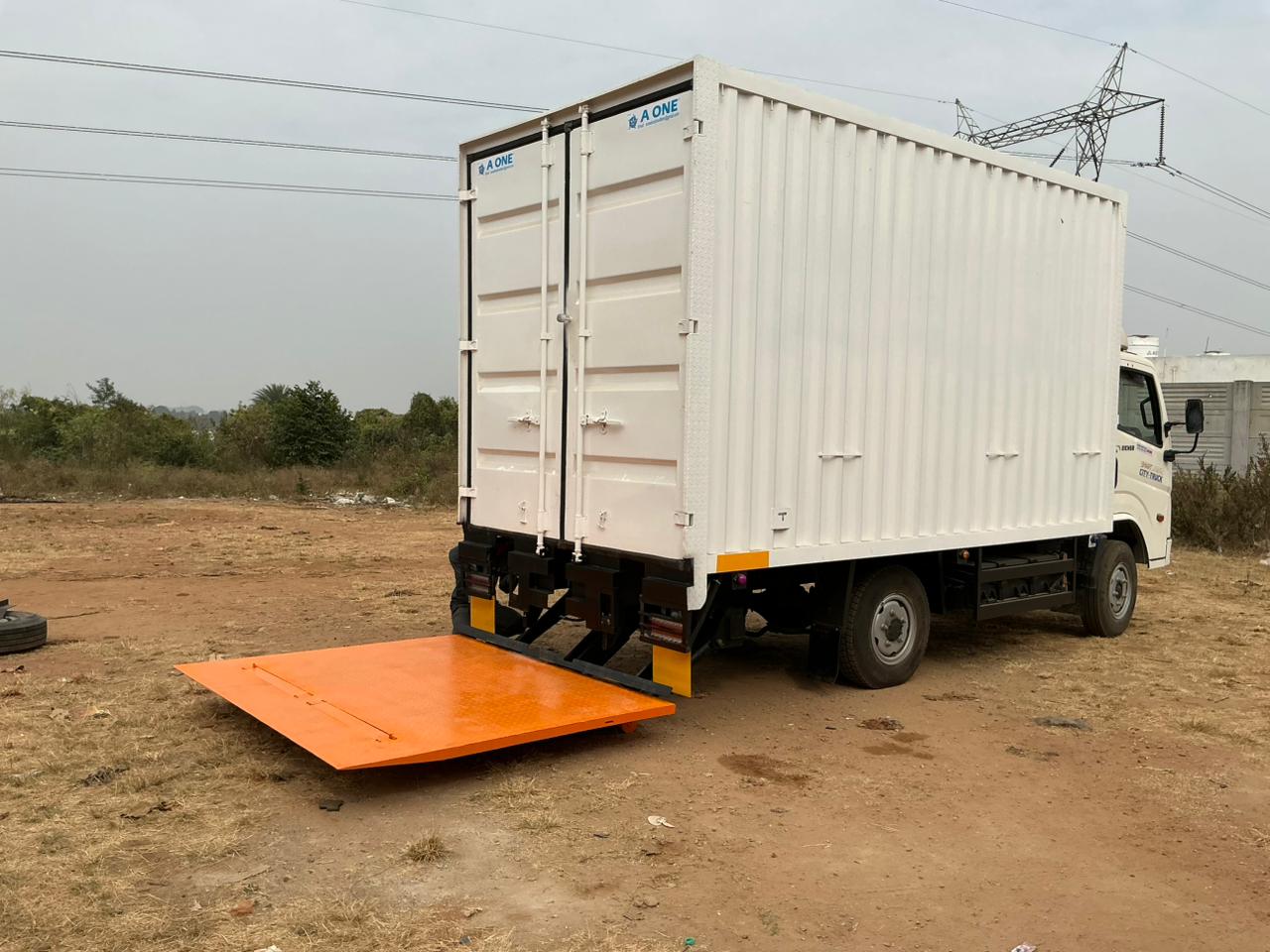
A Construction Tail Lift is a hydraulic lifting platform fitted to the rear of a truck or commercial vehicle to help load and unload heavy construction materials safely and efficiently. It reduces manual labour, improves site safety, and helps vehicles operate independently at different project locations.
What is a Construction Tail Lift?
A construction tail lift is a heavy-duty hydraulic loading platform designed for construction vehicles, site support trucks, utility vehicles, and industrial transport applications.
It allows goods and equipment to be lifted from ground level to truck floor level without depending on manual lifting, temporary ramps, cranes, or forklifts at every site.
Construction tail lifts are especially useful for vehicles that frequently move materials between warehouses, fabrication units, project sites, and customer locations.
Why Construction Vehicles Need Tail Lifts
Construction operations often happen in locations where proper loading docks are not available. Many sites are temporary, uneven, or under development. This makes loading and unloading difficult, especially when heavy materials must be handled safely.
Without a tail lift, companies may face problems such as:
- Higher manual labour requirement
- Delays in loading and unloading
- Risk of worker injuries
- Product and equipment damage
- Dependency on forklifts or cranes
- Difficulty working at remote project sites
- Vehicle waiting time and poor productivity
A construction tail lift helps solve these problems by giving the vehicle its own hydraulic loading system.
Applications of Construction Tail Lifts
Construction tail lifts are useful for transporting and handling:
- Construction tools and equipment
- Generators and compressors
- Fabricated metal components
- Electrical and plumbing materials
- Site machinery and accessories
- Scaffolding components
- Formwork materials
- Industrial hardware
- Packed construction materials
- Project installation equipment
- Maintenance and service tools
Vehicles Suitable for Construction Tail Lifts
Construction tail lifts can be fitted to different types of commercial vehicles depending on the application, such as:
- Construction support trucks
- Utility service vehicles
- Container body trucks
- Open body trucks
- Project material transport vehicles
- Industrial goods carriers
- Maintenance service vehicles
- Machinery transport trucks
The correct tail lift design depends on vehicle size, load capacity, platform dimensions, and site usage.
Construction Tail Lift vs Manual Loading
Manual loading may look simply, but it can become costly over time due to labour dependency, injuries, delays, and material damage.
A tail lift provides a safer and more efficient alternative. It helps lift heavy goods in a controlled way and reduces the need for unsafe lifting practices.
For companies handling regular site deliveries, a tail lift can improve productivity and reduce operational stress.
Conclusion
A Construction Tail Lift is a smart investment for companies that regularly transport heavy tools, machines, materials, and construction equipment.
It improves loading safety, reduces manual labour, speeds up site operations, protects valuable goods, and makes construction vehicles more independent.
For construction companies, project contractors, industrial suppliers, and site service teams, tail lifts can improve both safety and productivity.