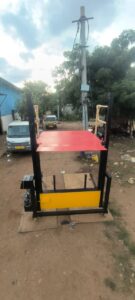
A Hydraulic Dock Leveller is an important loading equipment used in warehouses, factories, logistics hubs, distribution centers, and industrial loading bays. It helps bridge the height difference between the loading dock and the truck floor, allowing goods to move safely and smoothly between the building and the vehicle.
For companies handling pallets, trolleys, forklifts, pallet trucks, cartons, industrial goods, FMCG products, e-commerce shipments, and heavy materials, a hydraulic dock leveller improves loading safety, speed, and productivity.
What is a Hydraulic Dock Leveller?
A hydraulic dock leveller is a platform installed at a loading bay to connect the warehouse floor with the truck bed. Since different trucks have different floor heights, there can be a gap or height difference between the dock and the vehicle.
The hydraulic dock leveller adjusts this height difference using a hydraulic system. Its platform rises, lowers, and places a lip onto the truck floor so that forklifts, pallet trucks, and goods can move safely between the dock and the vehicle.
In simple words, a hydraulic dock leveller acts as a strong adjustable bridge between the warehouse and the truck.
Why Hydraulic Dock Levellers Are Important
Loading and unloading without proper dock equipment can be unsafe and slow. Workers may use temporary plates, ramps, or manual methods, which can increase the risk of accidents and product damage.
A hydraulic dock leveller helps solve common loading problems such as:
- Difference between dock height and truck floor height
- Unsafe forklift movement
- Product damage during loading
- Slow truck turnaround time
- Worker injury risk
- Difficulty handling heavy pallets
- Gaps between dock and vehicle
- Unstable temporary loading arrangements
By using a hydraulic dock leveller, warehouses can make loading operations more professional, safe, and efficient.
How Does a Hydraulic Dock Leveller Work?
A hydraulic dock leveller works with an electro-hydraulic system. The operator presses a control button, and the hydraulic power pack lifts the platform. Once the platform reaches the required position, the lip extends and rests on the truck floor.
After this, forklifts or pallet trucks can move goods across the dock leveller into or out of the truck.
When loading is complete, the dock leveller returns to its resting position. This operation is smooth, controlled, and safer compared to manual dock plates or temporary ramps.
Main Components of a Hydraulic Dock Leveller
1. Main Platform
The main platform is the heavy-duty deck where forklifts, pallet trucks, and goods move during loading and unloading. It is designed to handle regular industrial use.
2. Hydraulic Power Pack
The hydraulic power pack supplies pressure to lift and lower the dock leveller. It usually includes an electric motor, hydraulic pump, oil tank, valves, and controls.
3. Lip Plate
The lip plate extends from the front of the dock leveller and rests on the truck floor. It helps bridge the gap between the dock and the vehicle.
4. Hydraulic Cylinders
Hydraulic cylinders provide the lifting and lip movement. They allow the dock leveller to operate smoothly and safely.
5. Control Panel
The control panel allows the operator to raise, lower, and control the dock leveller. It is usually designed for simple and safe operation.
6. Safety Features
Hydraulic dock levellers may include safety valves, anti-slip surfaces, toe guards, maintenance supports, emergency stop controls, and other safety arrangements.
Key Benefits of Hydraulic Dock Levellers
1. Safe Loading and Unloading
A hydraulic dock leveller creates a stable bridge between the truck and the warehouse dock. This reduces the risk of forklift accidents, worker injuries, slipping, and unsafe manual loading.
Safety is one of the biggest reasons warehouses and factories use dock levellers.
2. Faster Truck Turnaround
When goods move smoothly between the dock and truck, loading and unloading becomes faster. This reduces waiting time and improves dispatch efficiency.
For logistics hubs and warehouses handling multiple vehicles daily, faster turnaround can improve overall productivity.
3. Reduces Product Damage
Uneven loading surfaces and gaps can damage goods during movement. A hydraulic dock leveller provides a smoother path for pallets, cartons, crates, and industrial goods.
This helps protect products during loading and unloading.
4. Suitable for Different Truck Heights
Different trucks may have different floor heights. A hydraulic dock leveller adjusts to the truck level and makes loading easier across different vehicle types.
This is useful for warehouses handling multiple vehicle sizes.
5. Improves Forklift Movement
Forklifts require a stable and smooth surface to move safely. A hydraulic dock leveller provides better forklift access between dock and vehicle.
This improves operator confidence and reduces loading risk.
6. Reduces Manual Labour
With a proper dock leveller, goods can be moved using forklifts or pallet trucks more efficiently. This reduces the need for manual lifting and carrying.
It also improves worker safety and reduces physical strain.
7. Professional Loading Bay Setup
A warehouse or factory with hydraulic dock levellers looks more organized and professional. It supports systematic dispatch, receiving, and loading operations.
Applications of Hydraulic Dock Levellers
Hydraulic dock levellers are commonly used in:
- Warehouses
- Logistics hubs
- Distribution centers
- Manufacturing factories
- FMCG warehouses
- E-commerce fulfillment centers
- Cold storage units
- Automotive component plants
- Retail supply chain warehouses
- Industrial loading bays
- Export packing units
- Pharmaceutical warehouses
- Food processing units
Hydraulic Dock Leveller for Warehouses
In warehouses, loading efficiency is very important. Trucks come and go throughout the day, and goods must be moved quickly and safely.
A hydraulic dock leveller helps warehouse teams load pallets, cartons, crates, and packed goods with better control. It reduces loading delays and supports smooth movement between storage areas and transport vehicles.
Hydraulic Dock Leveller vs Manual Dock Plate
A manual dock plate is a simple plate used to bridge the gap between dock and truck. It may be suitable for light-duty or occasional use.
A hydraulic dock leveller is more suitable for regular, heavy-duty, and professional loading operations. It can handle higher load requirements, offers smoother movement, and provides better safety and convenience.
Choose a manual dock plate for very light and occasional loading.
Choose a hydraulic dock leveller for regular warehouse and industrial loading operations.
Hydraulic Dock Leveller vs Loading Ramp
A loading ramp is usually used where there is no fixed dock or where goods need to move from ground level to truck level.
A hydraulic dock leveller is installed at a fixed loading bay and is used to adjust the difference between dock height and truck floor height.
Both are useful, but the right choice depends on your loading area, vehicle type, and operational requirement.
How to Choose the Right Hydraulic Dock Leveller
Before selecting a hydraulic dock leveller, consider:
- Load capacity required
- Type of vehicles handled
- Dock height
- Truck floor height range
- Forklift weight and movement frequency
- Platform size
- Lip length
- Loading frequency
- Indoor or outdoor loading bay
- Safety features
- Civil pit requirement
- Power supply availability
- Service and maintenance support
Choosing the correct dock leveller ensures safe operation, better durability, and long-term performance.
Important Safety Features in Hydraulic Dock Levellers
A good hydraulic dock leveller should include safety features such as:
- Anti-slip platform surface
- Hydraulic safety valve
- Emergency stop control
- Maintenance support bar
- Toe guard protection
- Side safety plates
- Controlled lowering system
- Strong lip plate
- Overload protection
- Warning markings
- Reliable electrical controls
Safety should always be a priority because dock levellers are used with forklifts, pallet trucks, and heavy goods.
Maintenance Tips for Hydraulic Dock Levellers
To keep a hydraulic dock leveller working reliably, regular maintenance is important.
Basic maintenance includes:
- Check hydraulic oil level
- Inspect hydraulic hoses and fittings
- Check platform movement
- Clean the pit area regularly
- Inspect lip plate operation
- Test control panel and emergency stop
- Check welding and structure
- Inspect safety support bar
- Lubricate moving parts as recommended
- Avoid overloading
- Service through trained technicians
Proper maintenance improves safety, reduces breakdowns, and increases equipment life.
Why Choose Koralift Hydraulic Dock Levellers?
Koralift provides reliable hydraulic lifting and loading solutions for warehouses, factories, logistics operations, commercial vehicles, and industrial material handling applications.
Our hydraulic dock leveller solutions are designed with focus on strength, safety, smooth operation, durability, and practical use in Indian working conditions. Koralift can support customers with suitable loading bay solutions based on dock height, vehicle type, load capacity, platform size, and usage frequency.
Whether you need a hydraulic dock leveller for a warehouse, factory, distribution center, or industrial loading bay, Koralift can help recommend the right solution.
Conclusion
A Hydraulic Dock Leveller is an essential loading bay equipment for warehouses, factories, logistics hubs, and industrial facilities. It bridges the gap between the loading dock and truck floor, making loading and unloading safer, faster, and more efficient.
It helps improve forklift movement, reduce labour dependency, protect goods, and increase truck turnaround speed.
For businesses handling regular truck loading operations, a hydraulic dock leveller is a smart and practical investment.