Top 3 Tail Lifts to Improve Business Vehicle Efficiency
For businesses that transport heavy goods, equipment, or materials, loading and unloading can be one of the most time-consuming parts of daily operations. A reliable tail lift can make this process faster, safer, and more efficient. Choosing the right system depends on the vehicle type, load capacity, available space, and frequency of use.
In this article, we explore the Top 3 Tail Lifts that businesses should consider for their vehicles and how each option can support different material-handling requirements.
Why Do Businesses Need Tail Lifts?
A tail lift is a mechanical lifting platform installed at the rear of a commercial vehicle. It helps operators move goods between ground level and the vehicle’s loading deck without relying entirely on manual lifting.
For businesses handling heavy or bulky products, a suitable tail lift can:
- Reduce manual handling
- Improve loading and unloading efficiency
- Support safer material movement
- Reduce loading time
- Improve vehicle usability
- Handle different types of cargo
The ideal tail lift depends on the application and the vehicle configuration.
Top 3 Tail Lifts for Business Vehicles
1. Hydraulic Tail Lift
A Hydraulic Tail Lift is a popular choice for businesses that regularly transport heavy goods. It uses a hydraulic system to raise and lower the platform, providing controlled lifting performance.
Hydraulic tail lifts are suitable for applications involving boxes, machinery, industrial equipment, pallets, and other heavy materials. They are available in different capacities and configurations to suit various commercial vehicles.
Key benefits include:
- Strong lifting capability
- Controlled platform movement
- Suitable for heavy-duty applications
- Efficient loading and unloading
- Available for different vehicle types
Businesses involved in logistics, manufacturing, distribution, and transportation can benefit from this type of tail lift.
2. Cantilever Tail Lift
A Cantilever Tail Lift features a platform that extends outward from the rear of the vehicle. This design provides a practical loading surface and can be useful when goods need to be transferred between the ground and vehicle deck.
Cantilever models are commonly considered for delivery vehicles, trucks, and commercial fleets where frequent loading and unloading is required.
Advantages include:
- Convenient platform access
- Efficient ground-level loading
- Suitable for delivery operations
- Good visibility of the loading area
- Flexible application options
For businesses making multiple deliveries each day, a cantilever design can help streamline routine loading operations.
3. Column Tail Lift
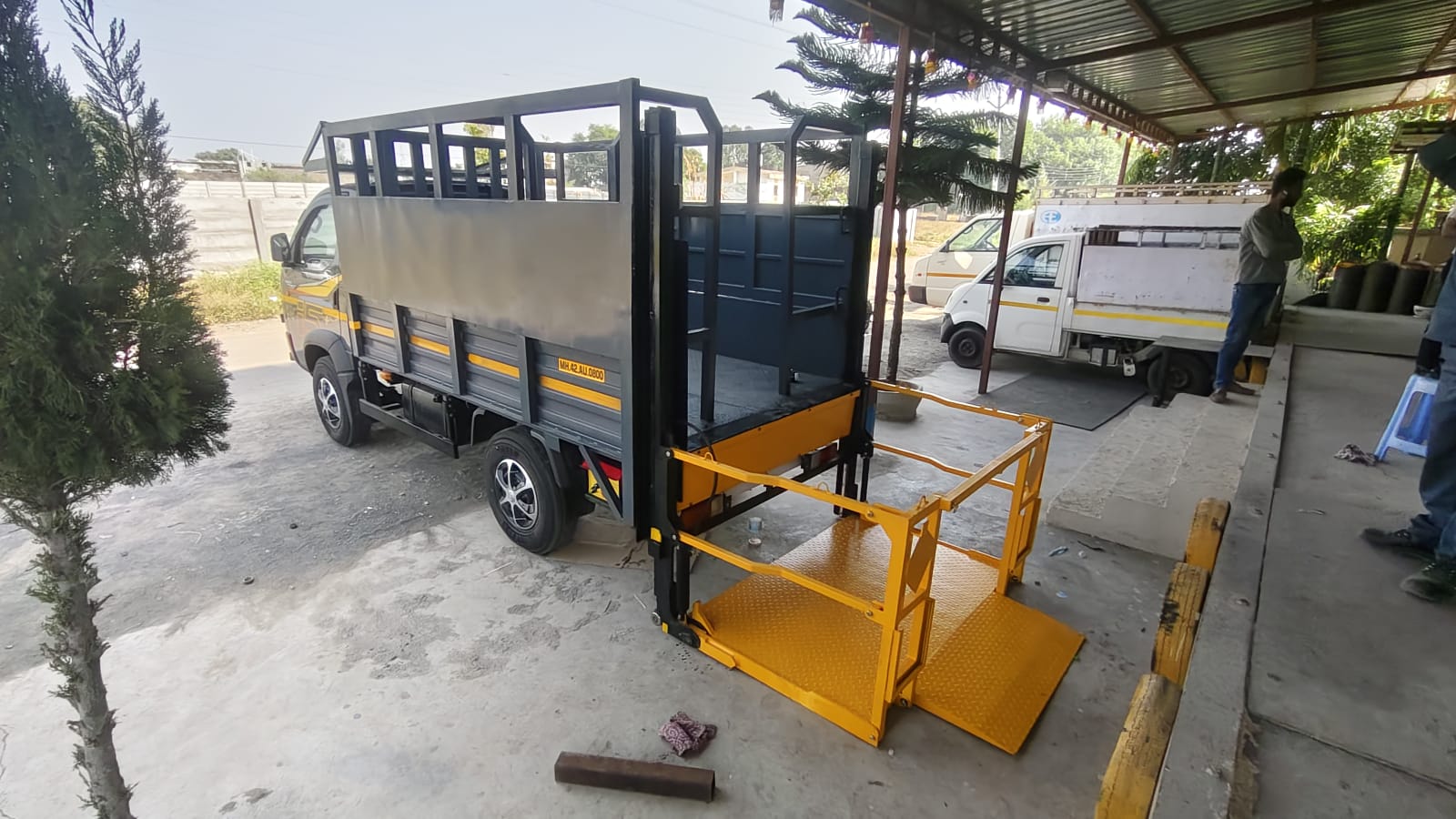
A Column Tail Lift uses vertical columns to guide the platform during lifting and lowering. This configuration can provide stable movement and is particularly useful for businesses transporting heavier or larger loads.
Column tail lifts can be configured for different vehicle sizes and lifting capacities, making them suitable for demanding commercial applications.
Key benefits include:
- High lifting capacity options
- Stable vertical movement
- Suitable for heavy loads
- Practical for commercial fleets
- Efficient loading and unloading
They can be especially useful for businesses working with pallets, industrial goods, equipment, and other substantial loads.
Which Tail Lift Is Best for Your Business?
There is no single tail lift that is ideal for every business. Hydraulic Tail Lifts are well suited to many heavy-duty applications, Cantilever Tail Lifts can be useful for frequent delivery operations, and Column Tail Lifts can provide a practical solution for heavier loads and vertical lifting requirements.
The right choice should be based on the vehicle, cargo, lifting capacity, operating environment, and frequency of use.
Conclusion
The Top 3 Tail Lifts—Hydraulic, Cantilever, and Column—offer different solutions for businesses that need more efficient vehicle loading and unloading. Choosing the correct system can help improve workflow, reduce manual handling, and make commercial vehicles more productive.
Before purchasing a tail lift, businesses should carefully assess their load requirements, vehicle specifications, operating conditions, and safety needs. A properly selected and professionally installed tail lift can become an important part of an efficient material-handling operation. check our Top 3 Tail Lifts.