A Pickup Vehicle Tail Lift is a compact hydraulic loading platform fitted at the rear of a pickup truck or light commercial vehicle. It helps lift goods safely from ground level to vehicle floor level, reducing manual labour and making loading and unloading faster, safer, and more professional.
For small businesses, logistics operators, service teams, rural suppliers, farmers, industrial vendors, and delivery vehicle owners, a pickup vehicle tail lift can improve daily transport efficiency and reduce physical strain on workers.
What is a Pickup Vehicle Tail Lift?
A pickup vehicle tail lift is a rear-mounted hydraulic lifting system designed especially for pickup trucks and small commercial vehicles. It works with a hydraulic power pack, cylinders, control switches, and a strong platform.
The platform is lowered to ground level, goods are placed on it, and the hydraulic system lifts the load to the pickup bed height. During unloading, the platform lowers the goods safely back to ground level.
This makes pickup vehicles more useful for carrying heavy, bulky, or difficult-to-lift goods.
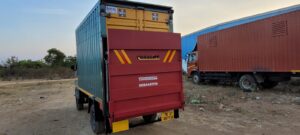
Why Pickup Vehicles Need Tail Lifts
Pickup vehicles are widely used for delivery, service, rural transport, industrial supply, farm goods movement, construction support, and small business logistics. However, lifting heavy goods into the pickup bed manually can be difficult and unsafe.
Without a tail lift, users may face problems such as:
- Heavy manual loading
- Worker injuries
- Product damage
- Slow loading and unloading
- Extra manpower requirement
- Difficulty handling machines and tools
- Unsafe temporary ramp usage
- Delivery delays
- Labour shortage during urgent work
A pickup vehicle tail lift solves these problems by giving the vehicle its own compact loading system.
Key Benefits of Pickup Vehicle Tail Lift
1. Safer Loading and Unloading
Manual lifting of heavy goods into a pickup vehicle can cause back injuries, hand injuries, slipping, and load dropping accidents. A pickup vehicle tail lift provides a stable hydraulic platform for safer material handling.
Goods can be placed on the platform using trolleys, crates, racks, or manual handling equipment and lifted smoothly to vehicle bed level.
2. Reduces Labour Dependency
With a hydraulic tail lift, fewer workers are required for loading and unloading. One or two trained operators can handle many loading tasks more safely and efficiently.
This helps reduce manpower dependency for small businesses and delivery operations.
3. Faster Delivery Operations
Pickup vehicles are often used for multiple deliveries or service visits. A tail lift reduces loading and unloading time at each location.
Faster handling improves vehicle turnaround and helps complete more trips in less time.
4. Protects Goods from Damage
Manual loading can damage goods due to dropping, dragging, or rough handling. A pickup vehicle tail lift provides smoother and controlled movement.
This is useful for tools, machines, cartons, appliances, spare parts, cylinders, crates, equipment, and packed goods.
5. Useful Where Loading Docks Are Not Available
Most pickup vehicle loading points do not have loading docks or forklifts. Deliveries may happen at shops, homes, farms, small warehouses, factories, construction sites, rural areas, and customer locations.
A tail lift allows the pickup to load and unload directly from ground level.
6. Compact and Practical Design
Pickup vehicle tail lifts are designed to suit smaller commercial vehicles. They are compact, practical, and suitable for daily use without unnecessarily affecting vehicle operation.
The right design depends on pickup model, load capacity, platform size, and application.
Applications of Pickup Vehicle Tail Lift
Pickup vehicle tail lifts are suitable for:
- Pickup truck deliveries
- Small commercial vehicles
- Utility vehicles
- Industrial supply vehicles
- Service vehicles
- Tool and equipment transport
- Agriculture supply vehicles
- Dairy and food delivery vehicles
- Gas cylinder delivery vehicles
- Medical equipment transport
- E-commerce delivery vehicles
- Retail distribution vehicles
- Construction support vehicles
- Machinery service vehicles
Pickup Vehicle Tail Lift for Small Businesses
Small businesses often use pickup vehicles for daily transport and customer delivery. Loading heavy goods manually can slow down operations and increase labour cost.
A pickup vehicle tail lift helps businesses handle goods professionally and safely. It is useful for delivering appliances, machines, tools, cartons, spare parts, crates, cylinders, packed goods, and service equipment.
Pickup Vehicle Tail Lift for Rural and Agriculture Use
Pickup vehicles are commonly used in rural and agricultural areas. They carry seed bags, fertilizer bags, pumps, farm tools, dairy crates, vegetable crates, fruit boxes, animal feed, and small machinery.
A pickup vehicle tail lift helps farmers, agri suppliers, dairy operators, and rural transporters load and unload goods safely even where proper loading infrastructure is not available.
Pickup Vehicle Tail Lift vs Manual Loading
Manual loading may look simple, but it can create hidden costs over time. These include worker injuries, product damage, slow delivery, labour dependency, and reduced vehicle productivity.
A pickup vehicle tail lift provides a safer and more efficient alternative. It reduces physical effort, improves loading control, and helps complete deliveries faster.
For regular pickup-based transport, a hydraulic tail lift can be a smart investment.
Pickup Vehicle Tail Lift vs Truck Tail Lift
A truck tail lift is usually designed for larger commercial vehicles and heavier loading requirements. A pickup vehicle tail lift is compact and suitable for smaller vehicles.
Both systems work on the same basic hydraulic principle, but pickup tail lifts must be carefully designed to match the vehicle payload, rear structure, platform size, and daily usage requirement.
How to Choose the Right Pickup Vehicle Tail Lift
Before selecting a pickup vehicle tail lift, consider:
- Pickup model and body design
- Required load capacity
- Platform size
- Pickup bed height
- Type of goods handled
- Loading frequency
- Vehicle payload capacity
- Installation space
- Power supply requirement
- Platform weight
- Safety controls
- Service support availability
Choosing the correct tail lift ensures safe operation, better vehicle balance, and long-term reliability.
Important Safety Features in Pickup Vehicle Tail Lifts
A good pickup vehicle tail lift should include practical safety features such as:
- Anti-slip platform surface
- Emergency stop control
- Controlled lifting and lowering
- Hydraulic safety valves
- Overload protection
- Strong platform structure
- Reliable operator controls
- Platform locking arrangement
- Warning markings
- Proper installation and commissioning
Safety is very important because pickup vehicles operate in many different environments, including city roads, farms, factories, shops, construction sites, and customer locations.
Maintenance Tips for Pickup Vehicle Tail Lifts
To keep a pickup vehicle tail lift working safely and reliably, regular maintenance is important.
Basic maintenance includes:
- Check hydraulic oil level
- Inspect hoses and fittings for leakage
- Test emergency stop function
- Check platform movement
- Keep the platform clean
- Inspect hinges and mounting points
- Check electrical controls
- Avoid overloading
- Inspect platform locking system
- Service through trained technicians
Proper maintenance helps reduce downtime and improves the working life of the lift.
Why Choose Koralift Pickup Vehicle Tail Lift?
Koralift provides reliable hydraulic tail lift and truck loading solutions for Indian commercial vehicles, pickup vehicles, logistics fleets, rural transport, and industrial applications.
Our pickup vehicle tail lift solutions are designed with focus on strength, safety, compact design, smooth operation, and practical use in Indian working conditions.
Koralift can help customers choose the right tail lift based on pickup model, load requirement, platform size, application, and daily operating conditions.
Whether you need a tail lift for pickup deliveries, farm transport, industrial supply, service vehicles, or small commercial goods movement, Koralift can support you with suitable hydraulic lifting solutions.
Conclusion
A Pickup Vehicle Tail Lift is a compact and practical loading solution for pickup trucks and light commercial vehicles. It helps improve loading safety, reduce manual labour, protect goods, and increase vehicle productivity.
For small businesses, logistics operators, farmers, service teams, industrial suppliers, and commercial vehicle users, a pickup vehicle tail lift can provide strong long-term value.