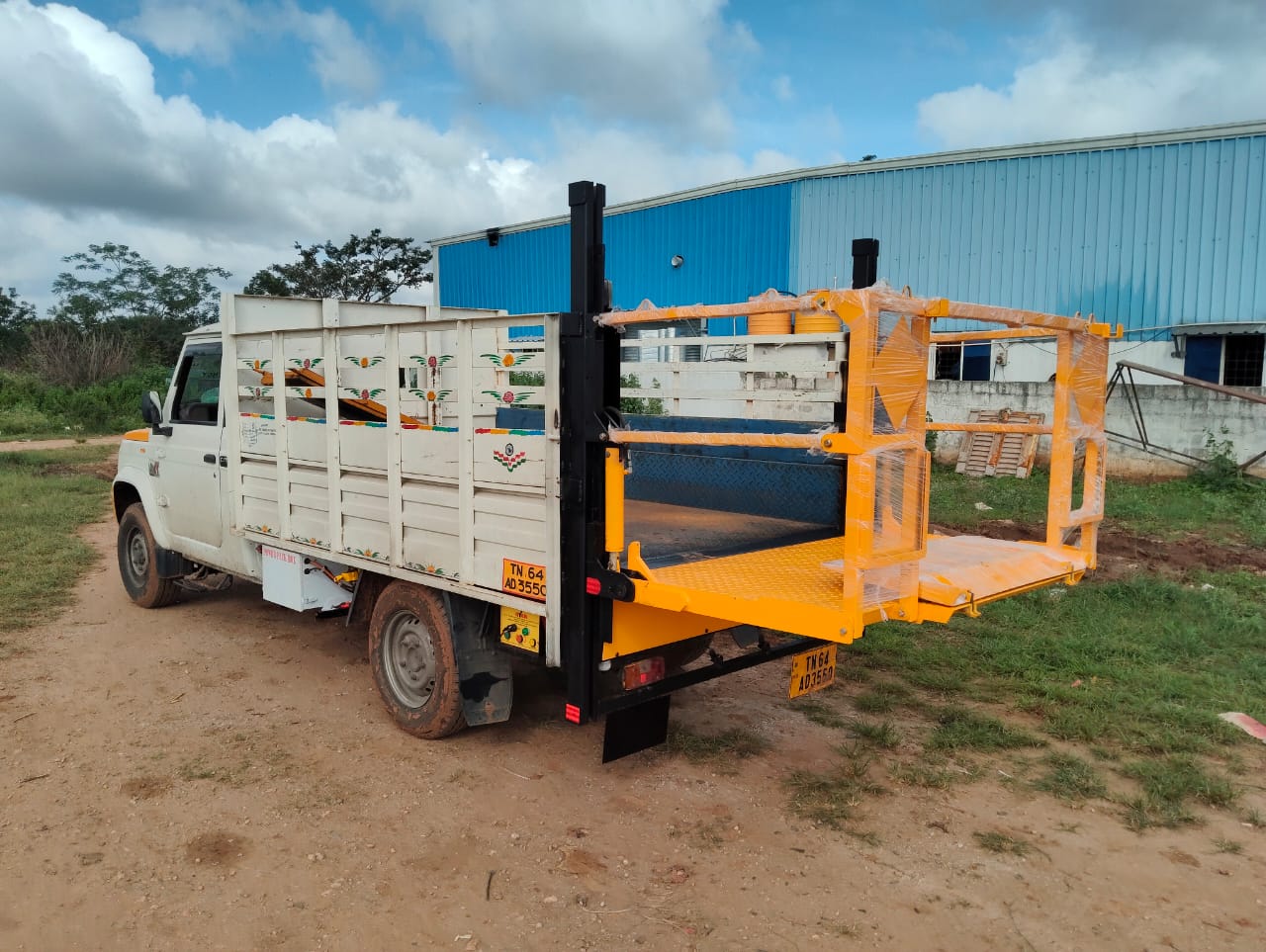
A Gas Hydraulic Tail Lift is a powerful loading system fitted at the rear of a truck or commercial vehicle. It helps lift goods safely from ground level to vehicle floor level and lower them smoothly during unloading.
To understand how a tail lift works, it is important to know its main components. Each part plays a key role in lifting performance, safety, durability, and smooth operation.
For logistics companies, fleet owners, warehouse operators, truck body builders, and industrial users, understanding the components of a hydraulic tail lift helps in better selection, operation, maintenance, and troubleshooting.
What is a Gas Hydraulic Tail Lift?
A Gas hydraulic tail lift is a vehicle-mounted lifting platform operated by a hydraulic system. It usually consists of a platform, hydraulic cylinders, power pack, control system, mounting structure, safety valves, and electrical components.
When the operator presses the control switch, the hydraulic power pack generates oil pressure. This pressure moves the cylinders, which lift, lower, open, close, or tilt the platform depending on the tail lift design.
Gas Hydraulic tail lifts are commonly used in logistics trucks, container vehicles, delivery trucks, warehouse vehicles, industrial goods carriers, cold chain vehicles, and commercial transport applications.
Why Knowing Tail Lift Components is Important
A Gas hydraulic tail lift handles heavy goods and works in demanding conditions. If one component fails, the lift may become unsafe or stop working.
Knowing the main parts helps users understand:
- How the tail lift operates
- Which parts require regular maintenance
- What safety features are important
- How to identify common problems
- Why quality components improve lift life
- How to choose the right tail lift manufacturer
A well-designed tail lift depends on the proper combination of mechanical, hydraulic, electrical, and safety components.
Main Components of a Gas Hydraulic Tail Lift
1. Tail Lift Platform
The platform is the main surface where goods are placed during loading and unloading. It moves between ground level and vehicle floor level.
The platform must be strong enough to carry the rated load safely. It should also have an anti-slip surface to prevent goods, pallet trucks, or operators from slipping.
Common platform features include:
- Heavy-duty steel or aluminium structure
- Anti-slip surface
- Reinforced frame
- Platform edge protection
- Warning markings
- Suitable platform size based on vehicle and load
The platform is one of the most visible and important parts of a hydraulic tail lift.
2. Hydraulic Power Pack
The hydraulic power pack is the heart of the hydraulic tail lift. It generates hydraulic pressure required to operate the lift.
A typical hydraulic power pack includes:
- Electric motor
- Hydraulic pump
- Oil tank
- Solenoid valves
- Pressure relief valve
- Filters
- Electrical terminals
- Control wiring
In vehicle-mounted tail lifts, DC hydraulic power packs are commonly used because they can operate from the truck battery.
The quality of the power pack directly affects lifting speed, performance, reliability, and service life.
3. Hydraulic Pump
The hydraulic pump converts mechanical power from the motor into hydraulic oil flow. This pressurized oil is sent to the hydraulic cylinders.
The pump must be selected based on:
- Required pressure
- Oil flow rate
- Load capacity
- Duty cycle
- Lifting speed
- Hydraulic system design
A weak or unsuitable pump can cause slow lifting, poor performance, or system failure.
4. Electric Motor
The electric motor drives the hydraulic pump. In most truck tail lifts, the motor operates using the vehicle’s 12V or 24V DC electrical system.
The motor should be powerful enough to support the required lifting capacity. It should also be durable enough for repeated loading and unloading operations.
Motor performance is important for smooth and reliable tail lift operation.
5. Hydraulic Cylinders
Hydraulic cylinders create the lifting force. When pressurized oil enters the cylinder, the piston moves and produces mechanical motion.
Depending on the tail lift design, cylinders may be used for:
- Lifting the platform
- Lowering the platform
- Tilting the platform
- Opening and closing the platform
- Folding or unfolding movement
Gas Hydraulic Tail lift cylinders must be strong, leak-free, and properly mounted. Cylinder bore size, stroke length, seal quality, and mounting arrangement are important for performance and safety.
6. Hydraulic Hoses and Fittings
Hydraulic hoses and fittings carry pressurized oil between the power pack, valves, and cylinders.
They must be suitable for the system pressure and working environment. Poor-quality hoses can leak, burst, or fail under pressure.
Important points include:
- Correct pressure rating
- Proper hose routing
- Strong fittings
- Leak-free connections
- Protection from sharp edges
- Regular inspection for cracks or damage
Hydraulic hose failure can stop tail lift operation and create safety risks.
7. Control Valves
Control valves direct the flow of hydraulic oil to different parts of the system. They help control lifting, lowering, tilting, opening, and closing functions.
Common valves used in tail lifts include:
- Direction control valves
- Solenoid valves
- Flow control valves
- Non-return valves
- Pressure relief valves
- Safety valves
Valves are important for smooth and controlled tail lift movement.
8. Pressure Relief Valve
The pressure relief valve protects the hydraulic system from excessive pressure. If system pressure goes beyond the safe limit, the valve releases oil back to the tank.
This prevents damage to hydraulic components and improves system safety.
A properly set pressure relief valve helps avoid overload-related failures.
9. Non-Return Valve
A non-return valve allows hydraulic oil to flow in one direction and prevents reverse flow.
In tail lift systems, it helps maintain hydraulic pressure and prevents unwanted movement of the platform.
This is important for load stability and safe operation.
10. Safety Valve
A safety valve helps prevent sudden platform drop in case of hydraulic failure, hose burst, or pressure loss.
Safety valves are very important in tail lift systems because the platform may carry heavy goods and operators may work nearby.
Good safety valve design improves confidence and reduces accident risk.
11. Tail Lift Control System
The control system allows the operator to operate the tail lift safely. It may include a control box, pendant controller, switch panel, remote control, or PLC-based control unit.
Common control functions include:
- Up
- Down
- Open
- Close
- Tilt up
- Tilt down
- Emergency stop
- Reset
- Power on/off
The controller should be simple, durable, clearly labelled, and suitable for the tail lift type.
12. Pendant Controller
A pendant controller is a hand-held wired control device used by the operator. It allows safe operation from a convenient position.
Pendant controllers are commonly used because they allow the operator to stand away from the moving platform while still controlling the lift.
A good pendant should have strong buttons, durable cable, proper sealing, and emergency stop function where required.
13. Electrical Wiring and Battery Connection
Electrical wiring connects the battery, motor, control switches, relays, solenoids, sensors, and safety devices.
In truck tail lifts, electrical reliability is very important because vibration, dust, moisture, and daily usage can affect connections.
Important electrical components include:
- Battery cable
- Fuse
- Relay
- Solenoid wiring
- Control wiring
- Key switch
- Battery cut-off switch
- Connectors
- Cable protection sleeves
Proper wiring prevents electrical failure and improves safety.
14. Battery or Power Source
Most vehicle-mounted Gas hydraulic tail lifts operate from the truck’s battery system. Some systems may also use an independent auxiliary battery pack.
The battery must supply enough power for the DC motor and control system.
For heavy-duty or frequent-use tail lifts, battery capacity and charging arrangement are very important.
15. Mounting Frame
The mounting frame connects the Gas Hydraulic tail lift to the vehicle chassis or body structure. It must be strong enough to carry the lift load and operating forces.
A weak or poorly installed mounting frame can cause structural failure, misalignment, or safety issues.
The mounting frame should be designed based on:
- Vehicle chassis
- Load capacity
- Platform size
- Tail lift type
- Mounting location
- Body design
Proper installation is as important as product quality.
16. Lifting Arms or Column Guides
Depending on the tail lift type, the system may use lifting arms or column guides.
A cantilever tail lift generally uses hydraulic arms for platform movement and tilting.
A column type tail lift uses vertical columns or guides for stable up-and-down movement.
These structural parts guide the platform and support lifting stability.
17. Hinges and Pivot Points
Hinges and pivot points allow platform movement. They are used where the platform opens, closes, tilts, or rotates.
These parts must be strong and properly lubricated. Worn-out hinges can create noise, movement issues, and safety risks.
Regular inspection of hinges, pins, and bushes is important.
18. Platform Locking System
The platform locking system secures the platform when it is not in use. This prevents unwanted movement during vehicle travel.
A proper locking arrangement improves road safety and protects the tail lift from damage.
Locking systems may be mechanical, hydraulic, or integrated with the tail lift design.
19. Limit Switches and Sensors
Some Gas hydraulic tail lifts use limit switches and sensors to monitor platform position, movement limits, load condition, or safety status.
These components can help prevent over-travel, unsafe operation, or incorrect sequencing.
Advanced systems may include:
- Platform position sensors
- Limit switches
- Pressure sensors
- Safety interlock sensors
- Door position sensors
- Overload sensors
Sensors improve control, safety, and automation.
20. Warning Lights and Safety Markings
Warning lights, reflective markings, flags, and visible platform edges improve safety during loading and road operation.
They help workers, drivers, and nearby people identify the moving platform clearly.
Safety markings are especially important during night operation, warehouse loading, and roadside deliveries.
21. Anti-Slip Surface
The anti-slip surface helps prevent slipping of goods, trolleys, pallet trucks, and operators on the platform.
This is very important during rainy conditions, dusty environments, and heavy-duty loading operations.
A proper anti-slip surface improves operator safety and goods handling.
22. Emergency Stop System
An emergency stop system allows the operator to stop the tail lift immediately during unsafe conditions.
This feature is important when working with heavy loads, moving vehicles, multiple workers, and busy loading areas.
Every professional tail lift system should include reliable emergency control.
How All Components Work Together
A Gas hydraulic tail lift works because all components are properly connected and coordinated.
The basic working process is:
- The operator activates the control switch
- The electric motor starts the hydraulic pump
- The pump sends pressurized oil through valves
- Hydraulic cylinders move the platform
- Safety valves and sensors control safe movement
- The platform lifts or lowers goods smoothly
- The locking system secures the platform after use
If the mechanical, hydraulic, electrical, or safety components are not properly designed, the lift may not perform safely.
Common Problems in Gas Hydraulic Tail Lift Components
Some common problems include:
- Low hydraulic oil level
- Battery power issue
- Hydraulic hose leakage
- Weak motor performance
- Faulty control switch
- Cylinder seal leakage
- Valve blockage
- Loose wiring
- Platform misalignment
- Worn hinges or pins
- Safety valve malfunction
- Slow lifting or lowering
Regular inspection helps identify these problems early and avoid major breakdowns.
Conclusion
The components of a Gas hydraulic tail lift work together to provide safe, smooth, and efficient loading for trucks and commercial vehicles.
Important parts such as the platform, hydraulic power pack, cylinders, valves, hoses, control system, mounting frame, safety valves, sensors, and locking system all play a critical role in performance and safety.
Understanding these components helps businesses choose a better Gas Hydraulic tail lift, maintain it properly, and operate it safely for long-term use.