A Cantilever Tail Lift is one of the most useful hydraulic loading solutions for trucks, logistics vehicles, container bodies, and commercial goods carriers. It is designed to lift heavy goods safely from ground level to vehicle floor level and lower them smoothly during unloading.
For companies handling regular loading and unloading, a cantilever tail lift helps reduce manual labour, improve safety, protect goods, and increase vehicle productivity.
What is a Cantilever Tail Lift?
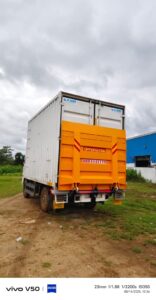
A cantilever tail lift is a rear-mounted hydraulic platform fitted to the back of a truck or commercial vehicle. The platform can open, close, lift, lower, and tilt with the help of hydraulic cylinders and mechanical arms.
It is especially useful when goods need to be loaded or unloaded at locations where forklifts, loading docks, or ramps are not available.
Cantilever lifts are widely used in logistics, distribution, warehousing, industrial goods transport, FMCG delivery, automotive component movement, and commercial vehicle loading applications.
How Does a Cantilever Tail Lift Work?
A cantilever tail lift works through an electro-hydraulic system. The hydraulic power pack supplies pressure to the cylinders, and the platform moves according to the operator’s control.
The basic operation includes:
- The platform opens from the rear of the vehicle
- It lowers to ground level
- Goods are placed on the platform
- The platform lifts goods to truck floor height
- Goods are moved into the vehicle safely
During unloading, the same process is done in reverse.
This makes loading and unloading faster, safer, and more professional compared to manual handling.
Why Cantilever Tail Lifts Are Important
Many delivery and logistics locations do not have proper loading infrastructure. In such cases, workers may depend on manual lifting, temporary ramps, or extra labour.
This can create several problems:
- Worker injuries
- Slow loading and unloading
- Product damage
- High labour dependency
- Vehicle waiting time
- Difficulty handling heavy goods
- Unsafe material movement
A cantilever tail lift solves these problems by giving the truck its own hydraulic loading platform.
Key Benefits of Cantilever Tail Lift
1. Safe Loading and Unloading
Safety is one of the biggest advantages of a cantilever tail lift. It reduces the need for workers to manually lift heavy loads into the vehicle.
Goods can be placed on the platform using pallet trucks, trolleys, or manual handling equipment. The hydraulic system then lifts the load smoothly to the truck floor level.
This reduces the risk of injuries, accidents, and unsafe loading practices.
2. Reduces Labour Dependency
Manual loading often requires several workers, especially when goods are heavy or bulky. With a cantilever lift, fewer trained operators can complete the loading process safely.
This helps reduce manpower requirement and improves daily operational efficiency.
3. Faster Vehicle Turnaround
Loading and unloading delays can affect delivery schedules. A cantilever lift helps complete handling work faster, especially for vehicles making multiple trips or multiple delivery stops.
Faster turnaround means better fleet utilization and improved productivity.
4. Suitable for Different Loading Locations
A cantilever tail lift is useful at factories, warehouses, shops, industrial units, construction sites, customer locations, and roadside delivery points.
Even when a loading dock is not available, the vehicle can still load and unload goods independently.
5. Protects Goods from Damage
Manual loading can cause goods to fall, drag, or get damaged. A hydraulic tail lift gives a stable platform for controlled movement.
This is important for handling packed goods, machinery, industrial components, electronics, automotive parts, and high-value cargo.
6. Flexible Platform Movement
Cantilever tail lifts can lift, lower, tilt, open, and close. This makes them suitable for many real-world loading conditions.
The tilt function is useful when working on uneven ground or when adjusting the platform angle during loading and unloading.
Applications of Cantilever Tail Lift
A cantilever tail lift is suitable for many industries and vehicle applications, including:
- Logistics trucks
- Container body vehicles
- Distribution vehicles
- FMCG delivery trucks
- E-commerce logistics vehicles
- Warehouse delivery vehicles
- Industrial goods carriers
- Automotive component transport
- Machinery transport vehicles
- Refrigerated vehicles
- Commercial goods vehicles
- Retail supply chain vehicles
Cantilever Tail Lift for Indian Commercial Vehicles
Indian loading conditions are different from many other markets. Trucks often deliver to places without fixed loading docks, proper ramps, or forklift support.
A cantilever lift is highly useful in these conditions because it allows the truck to load and unload independently.
For fleet owners, transport companies, and logistics businesses, this can improve delivery performance, reduce labour problems, and make operations more reliable.
Cantilever Tail Lift vs Manual Loading
Manual loading may look simple, but it can become costly over time. It increases labour dependency, injury risk, loading time, and product damage.
A cantilever tail lift provides a safer and more efficient alternative. It gives the truck a built-in loading system and reduces dependency on external loading equipment.
For regular commercial loading operations, a cantilever tail lift is a smart investment.
Cantilever Tail Lift vs Column Type Tail Lift
Both cantilever tail lifts and column type tail lifts are useful, but they are used for different applications.
A cantilever tail lift is suitable for general truck loading applications where flexible platform movement and tilt function are required.
A column type tail lift is more suitable for certain container body applications where vertical guided movement is required and the platform may also work as a rear door.
For general logistics, distribution, and commercial vehicle loading, a cantilever tail lift is a strong and practical option.
How to Choose the Right Cantilever Tail Lift
Before selecting a cantilever lift, consider:
- Vehicle type
- Truck body design
- Required load capacity
- Platform size
- Truck floor height
- Type of goods handled
- Loading frequency
- Power supply requirement
- Installation space
- Safety features
- Service support availability
Choosing the right model ensures safe operation, long service life, and better return on investment.
Important Safety Features in Cantilever Tail Lifts
A good cantilever lift should include important safety features such as:
- Anti-slip platform surface
- Emergency stop control
- Hydraulic safety valves
- Controlled lifting and lowering
- Overload protection
- Strong platform locking
- Warning markings
- Reliable operator controls
- Proper installation and commissioning
Safety should always be a priority when selecting a hydraulic tail lift for commercial vehicles.
Why Choose Koralift Cantilever Tail Lift?
Koralift provides reliable hydraulic lifting and loading solutions for trucks, commercial vehicles, logistics fleets, and industrial applications.
Our cantilever lifts are designed with focus on strength, safety, durability, and practical use in Indian working conditions. We understand the challenges faced by transport companies, fleet owners, factories, and logistics operators.
Koralift helps customers choose the right tail lift based on vehicle type, load requirement, platform size, application, and operating conditions.
Conclusion
A Cantilever Tail Lift is a practical and efficient hydraulic loading solution for trucks and commercial vehicles. It helps improve loading safety, reduce manual labour, protect goods, and increase vehicle productivity.
For logistics companies, industrial transporters, warehouses, and commercial fleet owners, a cantilever tail lift can make daily loading and unloading operations faster, safer, and more professional.